Home › Guides index › How to sell closeout costume jewelry lots on WhatNot
Guide
How to Sell Closeout Costume Jewelry Lots on WhatNot
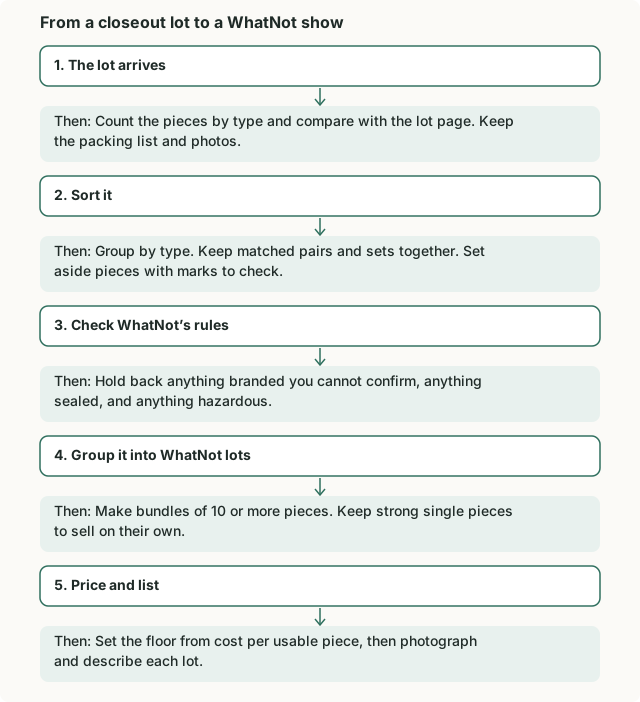
This guide is for a reseller who buys a closeout lot from this site and plans to sell it on WhatNot, piece by piece or in bundles. It follows the order of the work: read the lot page, count and sort, check WhatNot’s rules, then price and list.
Read each lot page as an old listing
The lot pages on this site rebuild earlier listings, so their counts and weights are what each listing said, not current stock. Ask for a current count and photos before you buy. To ask about a lot, email info@wholesalerunway.com.
The mix lot page states 50 pieces in total, and its type counts add up to 40 (earrings, necklaces, bracelets and rings). Count the pieces when the lot arrives and compare the count and the types with the page.
The by-the-pound pages sell by weight. They say weight tells you what you are paying for, not what each piece is worth, and that a lot may contain tangled jewelry and about 2% broken pieces. Treat that as an old listing’s figure, not a promise about your lot.
The mixed jewelry page sets a minimum order of 10 lb. A minimum commits you to an amount of jewelry before you can see it, so ask for the current count, the mix and the damage terms in writing first.
Count and sort before you list anything
Count by type, then sort. Keep matched earrings, necklace-and-earring sets and coordinated bracelets together, because the site’s types guide says they sell more easily as one item. Keep photos and notes of anything that does not match the lot page, in case you need to make a claim.
A few single pieces in a lot can be worth much more than the rest of the box. Look at each piece for marks, unusual materials and designs, and check sold listings before you price one.
Check WhatNot’s rules before a piece goes live
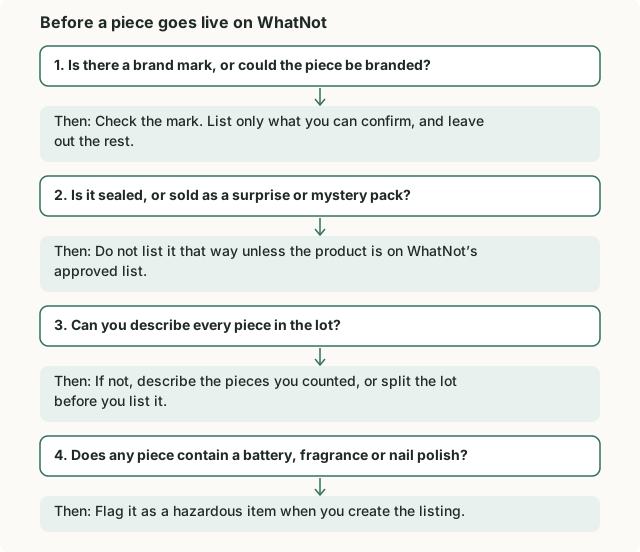
The Not So Junky mixed box page names several brands that an old listing said might appear. The site does not confirm that any brand is in a given box. WhatNot’s Help Center bars counterfeit goods and restricts branded items, so check the mark on each piece and list only what you can confirm.
Upcycled jewelry that uses luxury-branded parts, such as charms or clasps, is not allowed. Sealed and surprise packs are limited to products on WhatNot’s approved list, so do not sell an unopened lot as a mystery pack. Unopened packages and items you cannot describe can fall under the unknown-items rule. Flag any piece with a battery, fragrance or nail polish as hazardous.
Why gold-tone and silver-tone pieces draw buyers
Farzaneh Manizani, whose team regularly buys and sells vintage and closeout costume jewelry, says WhatNot viewers like gold-tone and silver-tone pieces because they want to try their luck at finding real gold and real silver. She says dozens of people have found some, and that she has personally found a lot of gold, silver and expensive vintage items.
That is her experience, not a promise about any lot. Gold tone and silver tone describe a finish, not the metal. Do not call a piece gold or silver until you have confirmed it, and say what you know and what you do not know in the description. Set these pieces aside when you sort, so you can show them one at a time.
Group the pieces into WhatNot lots
WhatNot’s help pages describe casepacks and bundles as lots of 10 or more units, and pallets as bulk lots that need a detailed manifest. A sorted costume jewelry lot fits the bundle size. Group matched pieces by type or style, and keep strong single pieces to sell on their own.
Give each lot one piece count and keep it the same in the listing, your notes and the show. Count again before you go live, because a host can combine lots during a show.
Photograph and describe each lot
Photograph the front and back of each piece, the inside, any mark and any flaw. Lay groups flat on a light surface, and zoom in to read the marks. Shoot a practice stream before your first show, and hold each piece close to the camera.
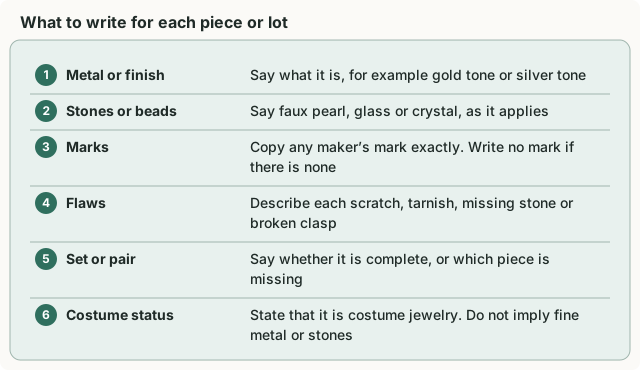
No standard grading scale for costume jewelry is published. Set your own tiers, such as mint, good and fair, and use them the same way every time. Label costume pieces as costume, and say what they are made of and what they are not made of.
Price from cost per usable piece
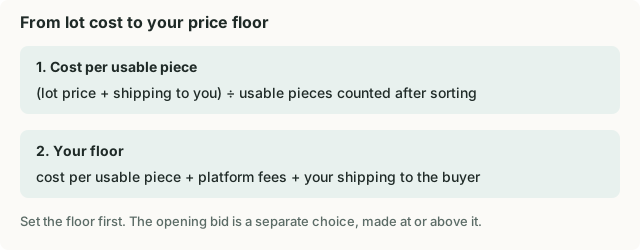
The by-the-pound pages advise working out your price per piece after sorting, not before, because the share of usable pieces decides the result. Count the usable pieces first, then divide your cost by that number.
Old listings on this site give seller estimates of what pieces might sell for. They are not a sales record. Check recent sold listings for similar pieces before you set a price. One seller guide reports that WhatNot has no sold-comparison search, so you may need to check other platforms. Check that for yourself.
Add platform fees and your shipping cost to reach your floor, and do not sell below it. A low opening bid is your choice, and the advice on it is mixed.
Fees, shipping and returns
WhatNot charges a commission and card processing. The rates that sellers and blogs report disagree, so use the fee schedule in Seller Hub rather than a figure from a blog.
WhatNot’s shipping help page says to ship within two business days of a sale, excluding weekends and holidays. Buyers pay shipping by default. Weigh the packed parcel with its packaging, and pack necklaces in zip bags or press-and-seal wrap so they do not tangle.
Most WhatNot sales are final. Buyer Protection covers items that never arrive, arrive damaged or do not match the listing, and the seller handles a claim first. Read the live Buyer Protection page for the filing deadline and the return rules.
About the author
Farzaneh Manizani’s team regularly buys and sells vintage and closeout costume jewelry. The experience in this guide is hers, as she described it to the site owner.
Related
Lots
Guides
- How to sell closeout costume jewelry
- Types of jewelry you will find in closeout lots
- How to buy cheap wholesale jewelry